.png)
.png)
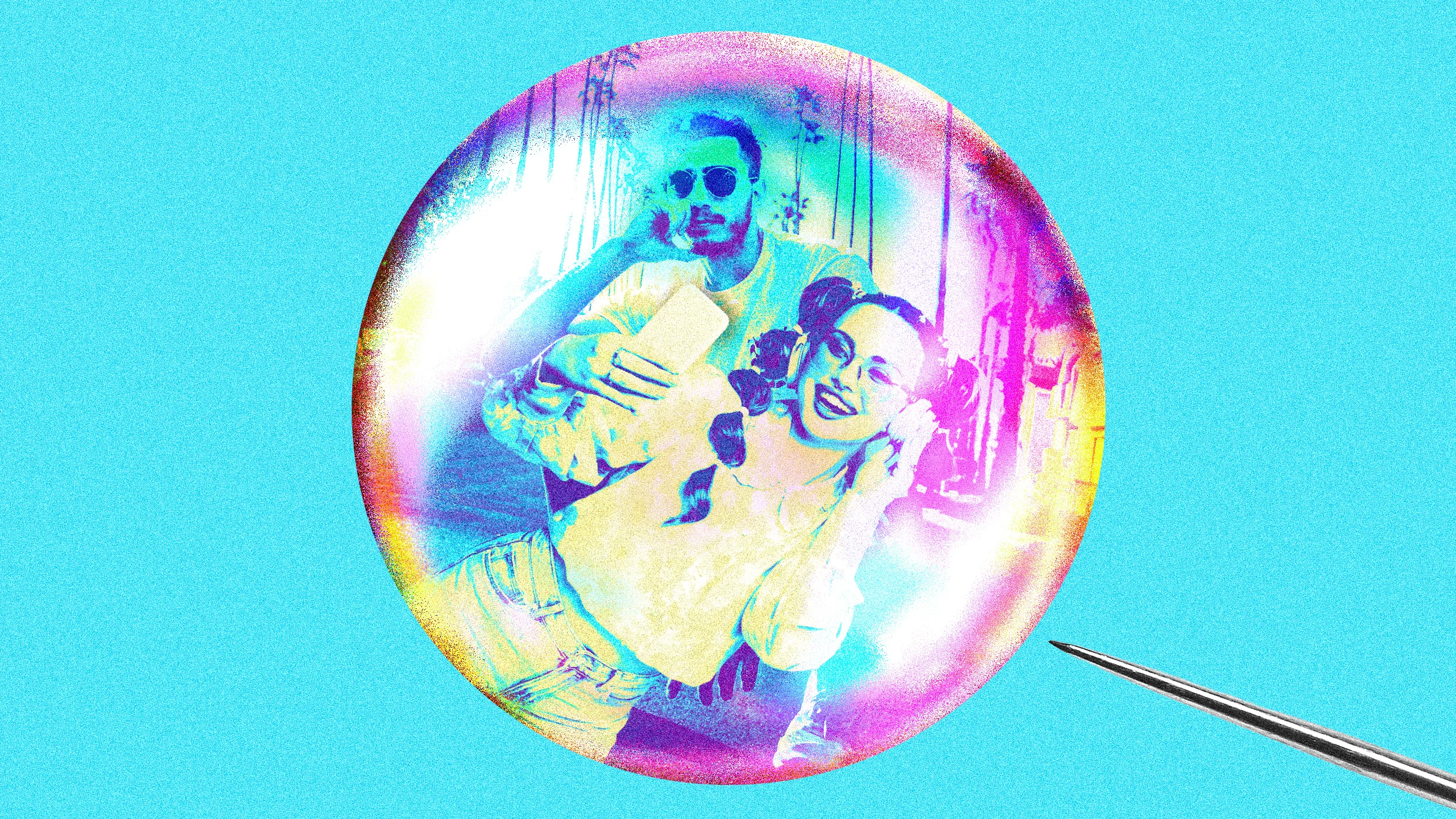

Fast Company just published a premium feature with a headline we've been waiting for someone to write: "The influencer bubble is finally popping" (Jeff Beer, August 4, 2026).
Beer opens with an analogy we love: influencers are the Neanderthals of the media ecosystem, and creators are the Homo sapiens. Same genus, different fates. One species offered brands transactional reach. The other built subject-matter authority, owned their audiences, and evolved into vertically integrated media companies. We know which one survived.
The piece brings together the CMOs of Rocket Companies, Chime, and e.l.f. Beauty - three of the most sophisticated marketing organizations in the world - and they all land in the same place: the era of paying for shiny, transactional product promos is over. What replaces it is deeper partnership with creators who have real authority with real communities. Rocket's CMO Jonathan Mildenhall, who oversees roughly $1 billion in annual marketing spend, put it bluntly, telling his team a year ago that "I don't work with influencers anymore."
Here's why this piece matters, and where Agentio fits in.
The attention-to-budget gap is the biggest arbitrage in marketing
Chime CMO Vineet Mehra frames the core disconnect in the piece: roughly 80% of the world's attention sits with creators, yet they capture only 4–5% of marketing budgets. His diagnosis of the "why" is one we've built our entire company around. Working with creators has been too fragmented: hundreds of thousands of individual partners, no way to buy at scale, and no true infrastructure for it, the way The Trade Desk made programmatic possible for the open web.
That's exactly the gap Agentio was founded to close. Agentio is the AI-powered advertising platform where brands and creators buy and sell sponsored content at scale, on YouTube and Meta - analyzing billions of signals inside creator content to match brands with the right creators, then automating the full workflow from selection through launch and measurement. In the piece, our founder and CEO Arthur Leopold describes the next phase: scaling creator partnerships without sacrificing the meaning and audience connection that make them work in the first place.
From insight to action in minutes, not months
The old creator campaign playbook took months: sourcing, vetting, negotiating, briefing, one creator at a time. Agencies made it faster. AI-driven infrastructure changes the equation entirely.
In the piece, Arthur describes how brands on Agentio can now move from insight to action in minutes and clear seven-figure budgets in hours - which is what finally allows creator spend to scale beyond the budgets it's stuck at today. The feature highlights Gruns, the greens-supplement brand acquired by Unilever for $1.2 billion in April 2026, which runs its entire social advertising program through Agentio: massive creative diversity, a wide spectrum of creators, and over a thousand ads running simultaneously.
Why "organic sponsored" stopped working
The article also captures a dynamic we talk about with brands every week: platforms have systematically suppressed unpaid ads - posts where a brand paid a creator but not the platform. Short-form organic sponsorships simply aren't performing like before anymore, because platforms have every incentive to keep un-monetized ads out of the feed. Influencers who built their business on those posts have watched their views collapse.
That's the mechanical reason the influencer bubble popped. It's not a vibe shift - it's an algorithm shift. And it's why Agentio's approach works: finding genuine brand fit inside creator content and building durable partnerships instead of forced one-off sponsorships. Done right, scale doesn't erode authenticity - it protects it.
Creators are the citation layer of AI search
The most forward-looking thread in the piece is about LLMs. The McKinsey research cited in the article finds at least half of consumers now use AI-powered search, which could absorb up to half of traditional search traffic. And LLMs weight trustworthy, community-validated sources: Mildenhall notes that his Super Bowl spend is invisible to an LLM - but the comments under credible creator content on YouTube, Reddit, and LinkedIn are exactly what these models weigh. His success metric for creator work is no longer audience size; it's whether the conversation underneath the content signals trust, authenticity, and authority.
Arthur makes the case in the article that creator content is becoming a key citation layer of AI search: the transcripts, the metadata, the community sentiment underneath a creator genuinely explaining why they love a product - all of it becomes gold for LLMs. Brands that build that foundation now will shape how people discover them for years.
This is a thesis we've published on before (see our 2026 YouTube Creator Marketing Playbook and guide to measuring YouTube creator advertising), and it's validating to see it echoed by the CMOs of billion-dollar advertisers in one of the most-read business publications in the world.
The takeaway
The influencer era optimized for reach. The creator era optimizes for attention, trust, and authority - with humans and machines alike. The brands winning right now, from Rocket to Chime to e.l.f., aren't buying impressions from shiny, happy people. e.l.f. airdropped Pringles, cat treats, and sunscreen to a solo sailor mid-Pacific and earned nearly 19 million views by being the subplot, not the main plot. They're integrating into content that communities actually care about, at a scale that was impossible two years ago.
That's the future Agentio is building. Read the full Fast Company feature here (premium subscriber exclusive).
FAQ
What is Agentio? Agentio is an AI-powered advertising platform where brands and creators buy and sell sponsored content at scale, on YouTube and Meta. Founded in 2023 by Arthur Leopold, Agentio analyzes billions of signals in creator content to match brands with the right creators and automates the full campaign workflow - from selection to launch to measurement.
Why is the influencer bubble popping? Social platforms now suppress organic sponsored posts where the creator was paid but the platform wasn't, so transactional influencer promos have stopped reaching feeds. Brands are reallocating to creators - partners with genuine subject-matter authority whose content platforms and audiences both reward.
What's the difference between influencers and creators? Influencers offer transactional reach: paid posts promoting products often unrelated to their content. Creators are vertically integrated media companies built on subject-matter authority - they own their audiences and distribution, and integrate brand partners into content their communities already trust.
How does creator content affect AI search (AEO)? LLM-powered search prioritizes authoritative, community-validated sources. YouTube transcripts, video metadata, and comment sentiment under creator content are among the most-cited inputs, so credible creators discussing a brand directly shapes how AI search engines describe and recommend it.
How much do brands spend on creators today? Creator partnerships capture only a low-single-digit share of marketing budgets - Agentio CEO Arthur Leopold puts current creator spend at 2–5%, while Chime CMO Vineet Mehra estimates 4–5% against roughly 80% of consumer attention. That gap persisted because creator media lacked a scaled marketplace - the problem Agentio was built to solve.
.png)